Behind PalmChrom
Why I’m building a portable HPLC
Fifteen years spent on one stubborn problem: getting lab-grade chemical analysis to where the sample is.
For the last 15 years, my work has centered on a simple, and stubborn, problem: how do you get lab-grade chemical analysis to the place where the sample actually is, instead of the other way around?
Environmental monitoring, in particular, still runs on a slow and expensive loop. Someone collects a sample in the field, packages it, ships it to a certified lab, and waits, sometimes days, sometimes weeks, for a result. By the time the data comes back, the river has moved on, the spill has spread, and the moment for a fast decision has passed.
By the time the data comes back, the river has moved on.
PalmChrom is my answer to that loop. It combines two techniques I’ve spent my career developing, Bead Injection and Sequential Injection Chromatography, into a single portable instrument fully capable of automated sample preparation and compound-specific quantification. No manual extraction. No shipping. No week-long wait. Just inject the sample, select what you want to measure, and get a result in 20 minutes, wherever you are.
I’m now in the final stretch of development, finishing the casing and electronics, with certification and field validation expected by the end of 2026. I’ll be sharing progress here as I get closer, the wins and the setbacks alike. If you work in environmental monitoring, field research, or citizen science and want to follow along, or tell me what would make this tool genuinely useful for your work, reach out.
From patent to field
From the patent to a working prototype, in five pictures.
-
March 15th, 2026
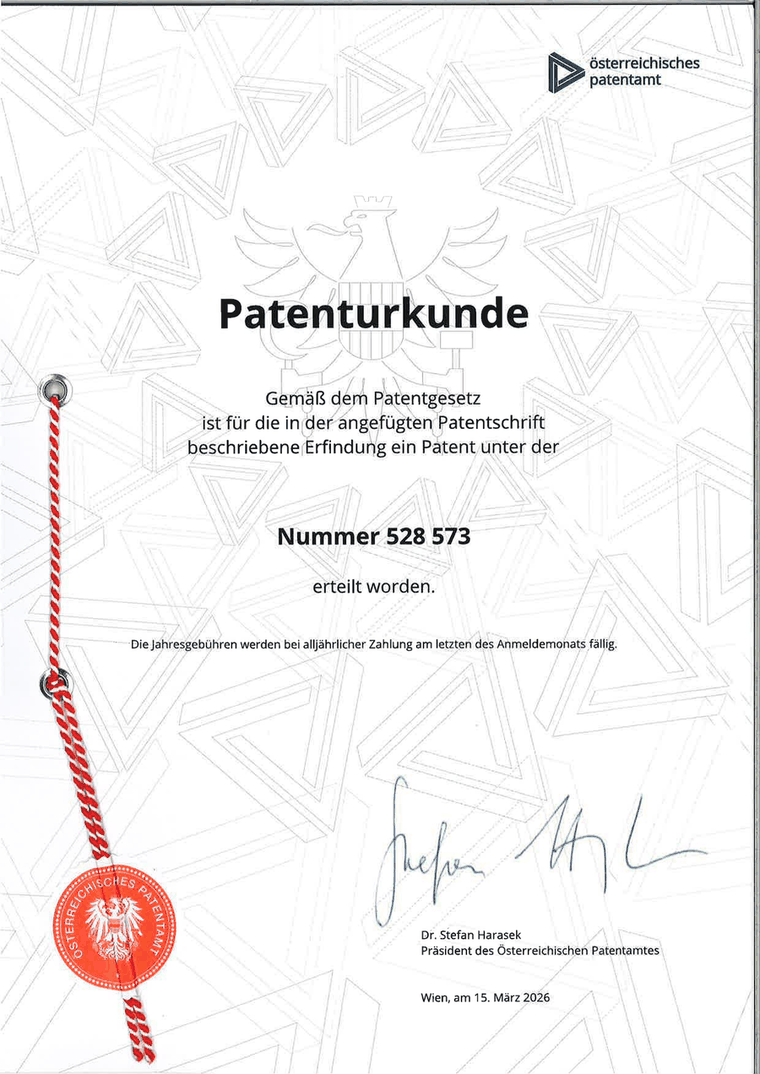
The patent
Austrian patent no. 528 573 is granted. It protects the valve at the heart of PalmChrom; the patent is owned by BOKU University, and PalmChrom is its exclusive licensee.
-
April 19th, 2026
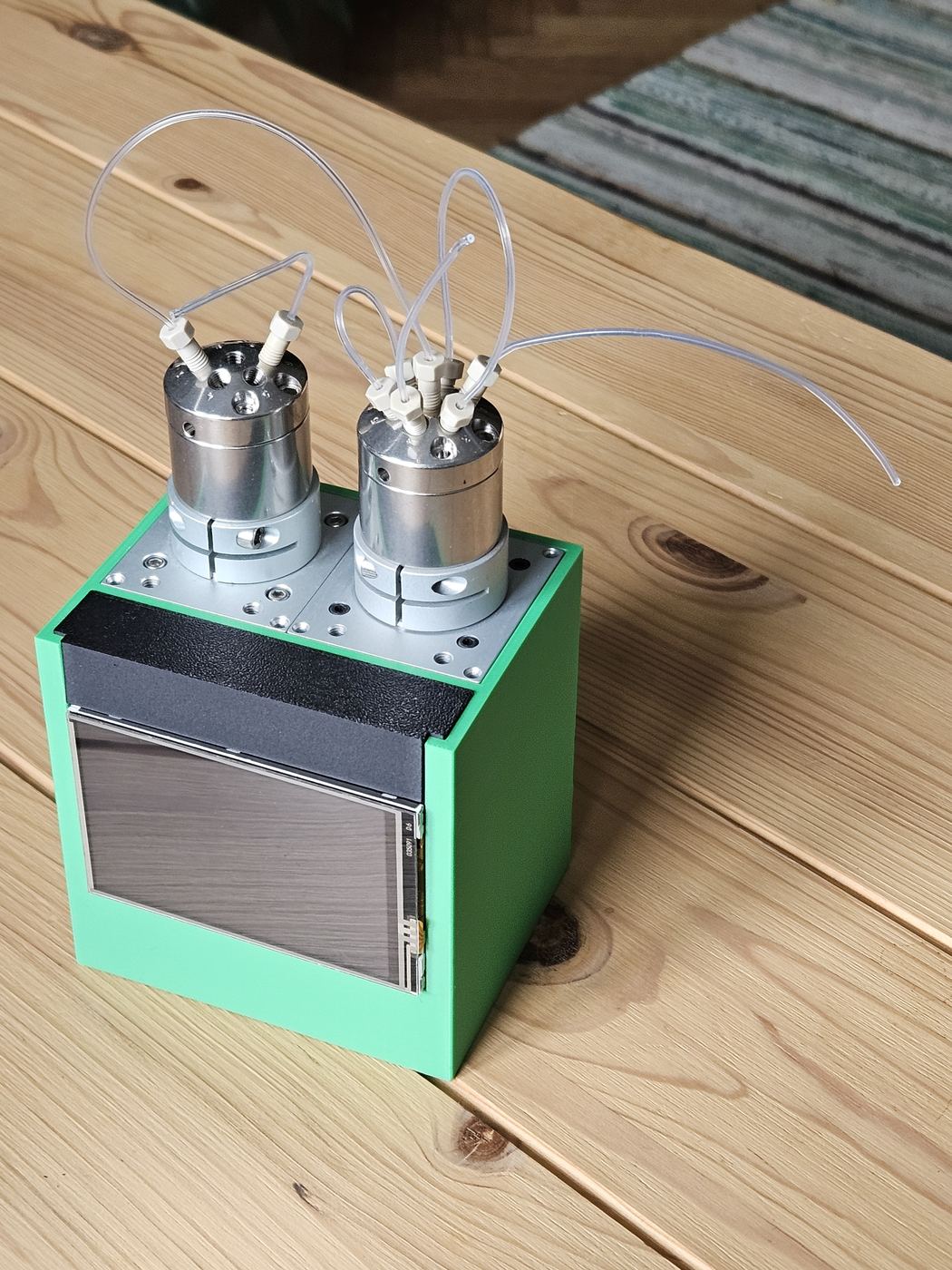
The first case
A quick first enclosure to test the idea. Two valves stand in for what would later become the final pump and valve.
-
June 4th, 2026
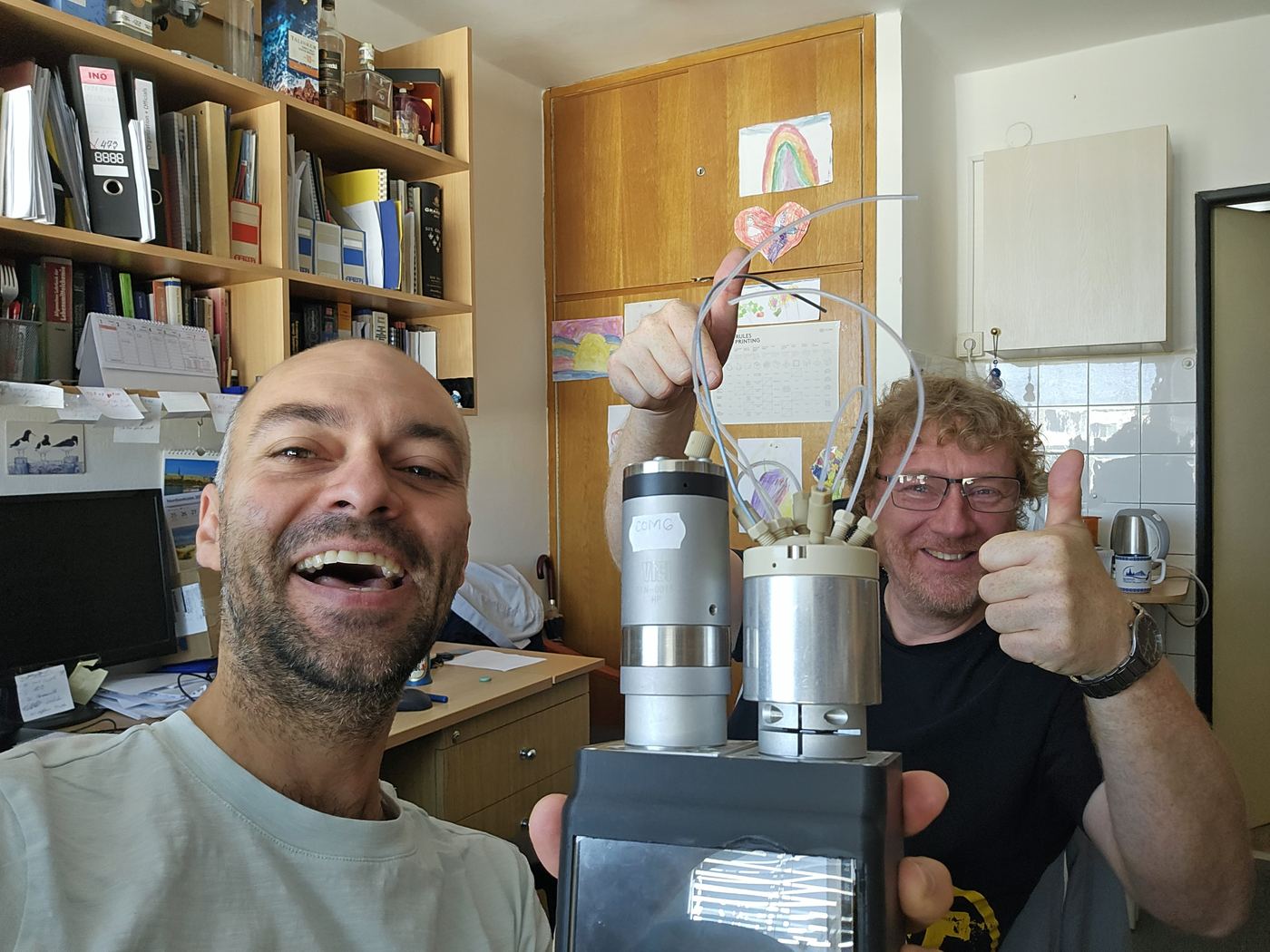
The second case, with pump and valve
Now with the real valve and pump. A celebratory selfie with Burkhard Horstkotte.
-
June 4th, 2026
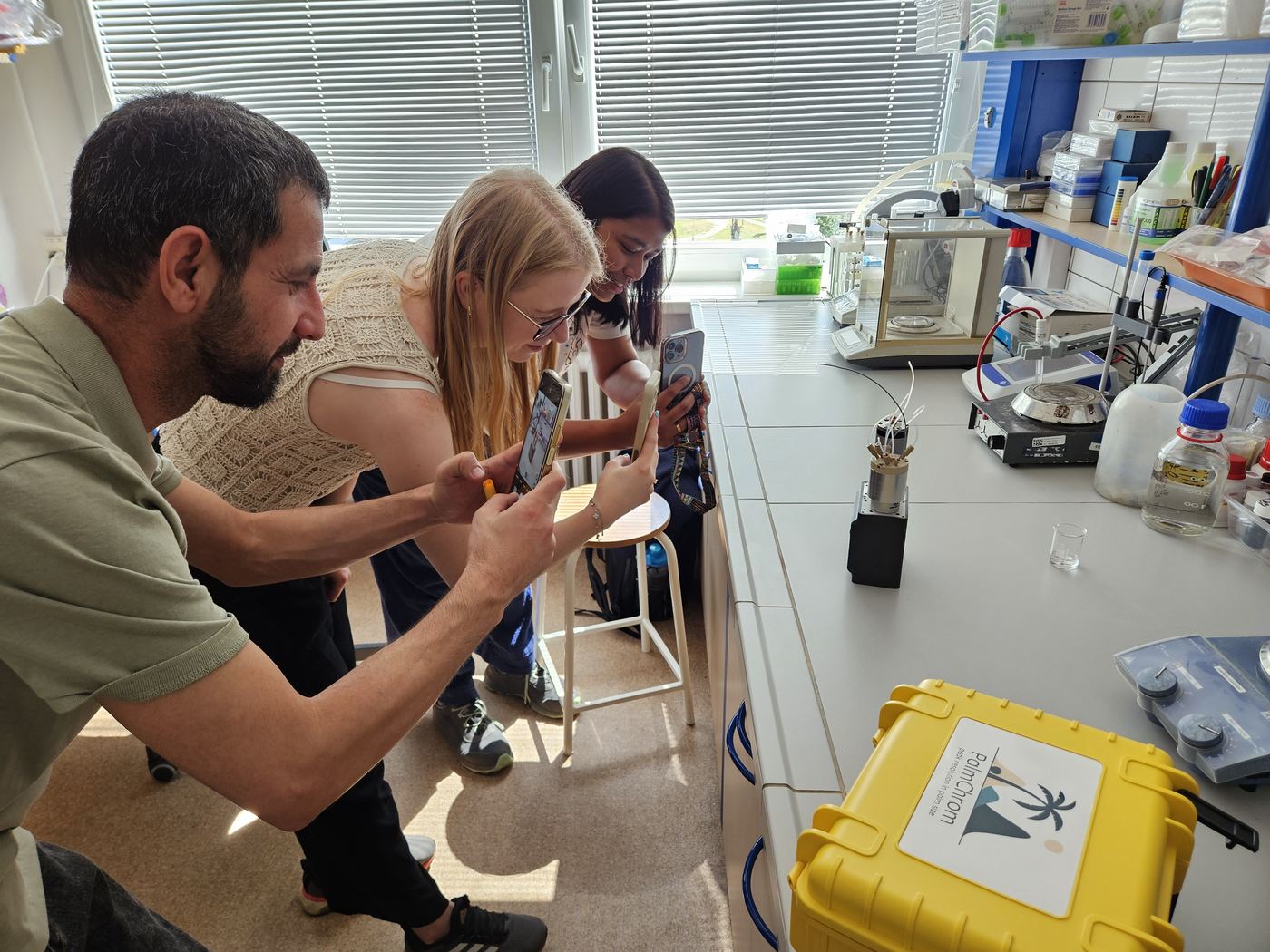
Its first audience
Burkhard’s group taking pictures of the prototype in the lab.
-
August 17th, 2026
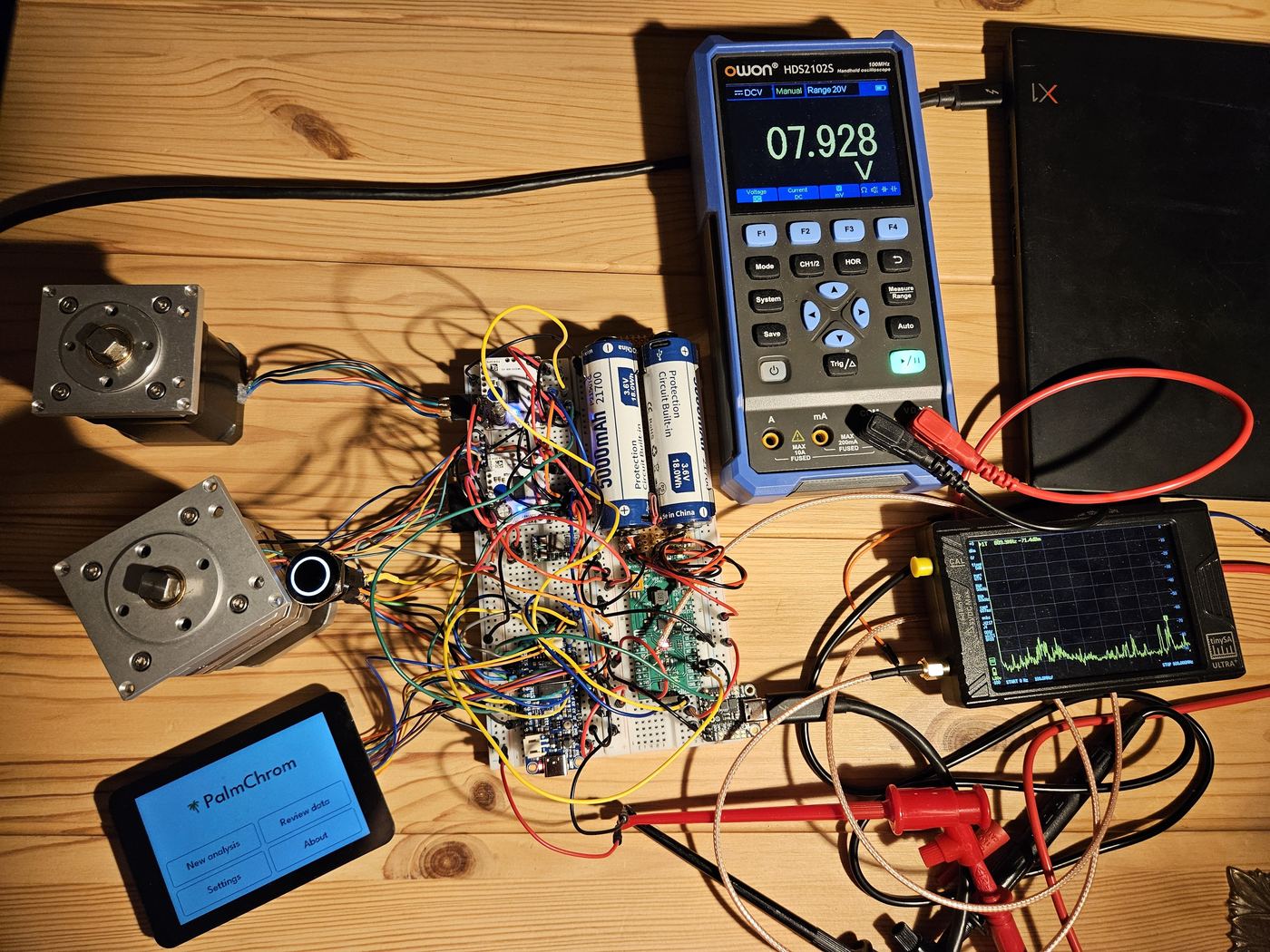
It’s alive!
All the electronics and motors spread over the table, running for the first time, with a multimeter and a tinySA keeping an eye on them.
PalmChrom is completing final certification, expected by the end of 2026.
Reserve your device or request early access.